
Look here
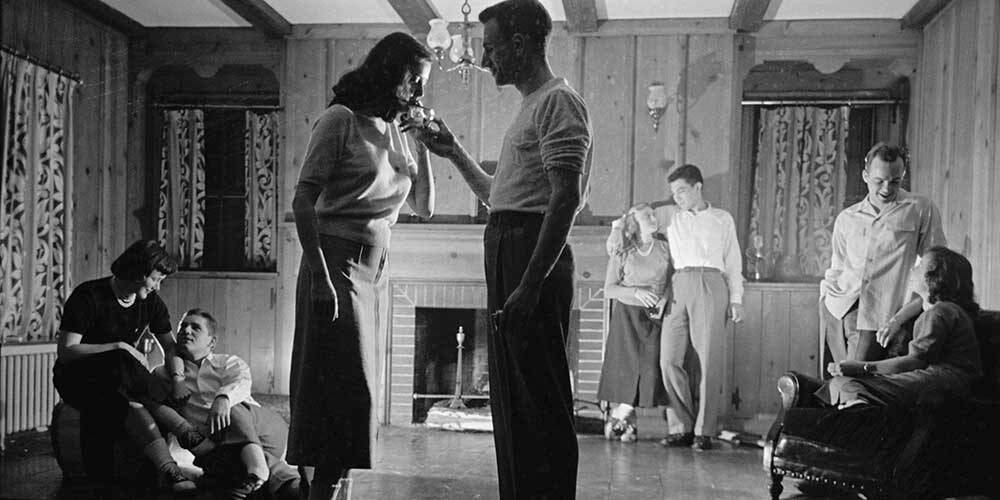
Years before Stanley Kubrick (1928-99) emerged as one of the greatest movie makers of modern times, he worked as a staff photographer at Look magazine. He shot hundreds of assignments for the popular lifestyle publication between 1947-50.
The bi-weekly Look published between 1937-71 and was a lively and photo-rich competitor to Life. Upon shutting down, publisher Gardner Cowles Jr. donated much of the Look archive to the Library of Congress. The assets include a plethora of Kubrick’s stills, including one collection of particular interest to U-M graduates like Walt Di Mantova, MA ’86. In May 1949, Look featured a series of Kubrick’s photos taken on the Michigan campus and throughout Ann Arbor.
The long-forgotten images resurfaced in 2025 when Di Mantova, a friend of U-M’s Bentley Historical Library and a self-described “defiant humanist and anticipatory anthropologist,” discovered them in a happy accident.
Summer school for geniuses
A lifelong fascination with physics, astrophysics, and space exploration had motivated Di Mantova to visit U-M’s Bentley Library to research U-M’s Summer Symposium in Theoretical Physics, a sort of “summer school” for geniuses, hosted in Ann Arbor between 1928-41. The recurring event attracted such world-renowned scientists as J. Robert Oppenheimer, Werner Heisenberg, Edward Condon, Hans Bethe, and Isidor Rabi, to name just a few.
“It’s not an exaggeration to say those ‘summer sessions’ changed the world for better or worse,” Di Mantova says.
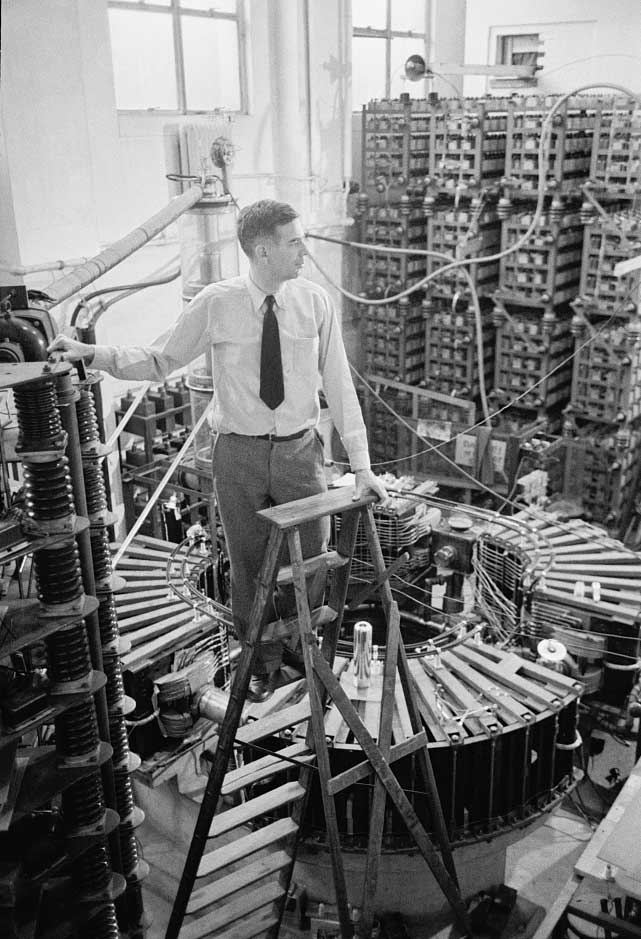
Horace Richard Crane. (Image credit: Stanley Kubrick, photographer, LOOK Magazine Photograph Collection, Library of Congress, Prints & Photographs Division.)
The Bentley archivists suggested he take his quest to the Library of Congress in Washington, D.C. His efforts produced some unidentified letters in handwriting that Di Mantova recognized as Oppenheimer’s and Heisenberg’s. And then he came upon a photo of U-M physicist Horace Richard Crane standing on the “racetrack synchrotron” he invented, which featured a design emulated by almost every particle accelerator since 1950.
The photo was credited to Kubrick, the American director, producer, screenwriter, and photographer, regarded by many as one of cinema’s most influential artists.
Coincidentally, Di Mantova had been listening to Vincent LoBrutto’s book Stanley Kubrick: A Biography (D.I. Fine Books, 1997). The author mentioned that Kubrick, during one of his travels across the U.S. to take photographs, had stopped in Ann Arbor on his way to Chicago.
“I read a great deal and have one of those memories that makes connections, even when I am not aware it is doing so,” Di Mantova says.
Looking into it further, he found another reference to the Ann Arbor stop in Michael Benson’s book Space Odyssey: Stanley Kubrick, Arthur C. Clarke, and the Making of a Masterpiece (Simon & Schuster, 2019).
A vision of the future
Di Mantova learned Kubrick took about 140 pictures during his time on campus; nearly 80 of them are digitized in the Look collection at the Library of Congress. The images capture a wide range of people and activities at the post-war university — the campus and classes, students, faculty, and deans.
Striking for the time, many of the subjects were women, and Di Mantova notes that one can already see hallmarks of Kubrick’s future filmography, including his attention to symmetry and asymmetry, his choice of dark backgrounds and backlighting, and his ability to catch a moment in such detailed ways as to make the everyday seem a little more constrained.Those trademarks would be developed in such classic Kubrick films as 2001: A Space Odyssey, A Clockwork Orange, Dr. Strangelove or: How I Learned to Stop Worrying and Love the Bomb, The Shining, and Full Metal Jacket.
Picture this
In addition to Crane and his synchrotron, Kubrick took photos of this pensive fellow and a metallurgy workshop.
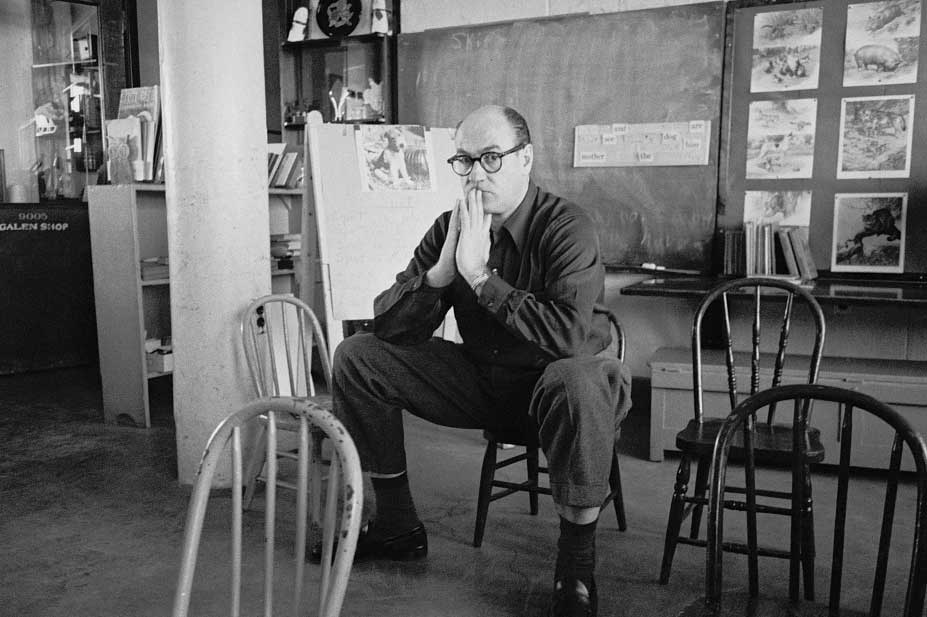
(Image credit: Stanley Kubrick, photographer, LOOK Magazine Photograph Collection, Library of Congress, Prints & Photographs Division.)
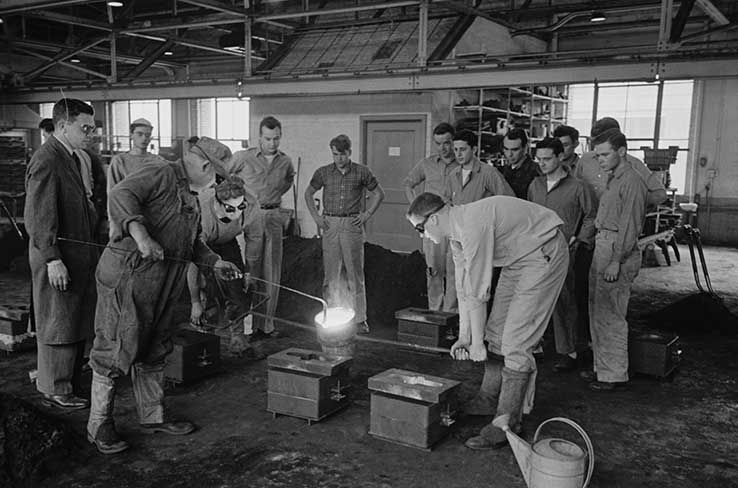
(Image credit: Stanley Kubrick, photographer, LOOK Magazine Photograph Collection, Library of Congress, Prints & Photographs Division.)
The collection includes pictures of students: one hard at work in the reading room at the Law School, one studying in her dorm room, and one more poring over an assignment at the bar.
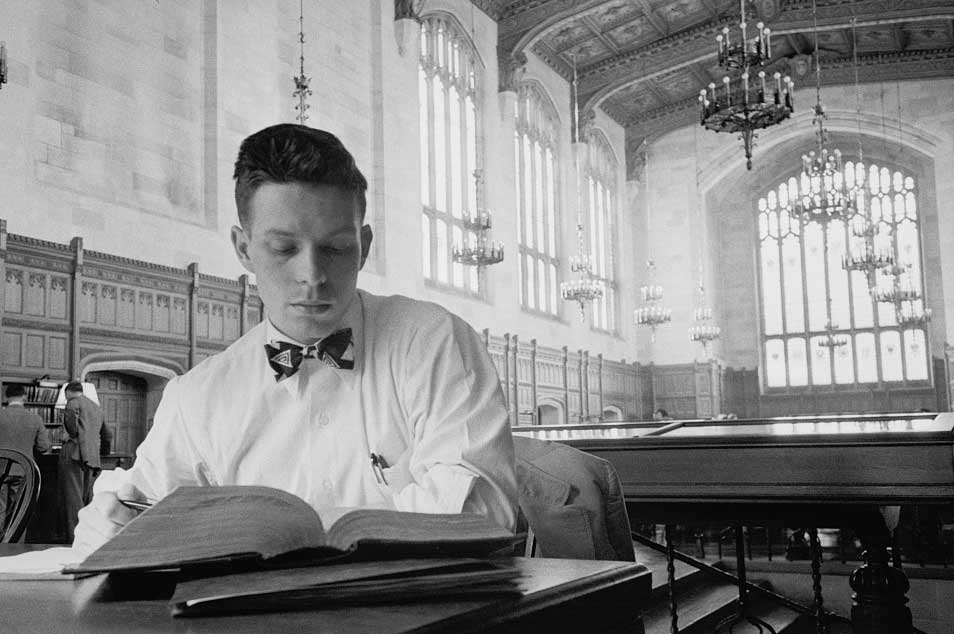
(Image credit: Stanley Kubrick, photographer, LOOK Magazine Photograph Collection, Library of Congress, Prints & Photographs Division.)
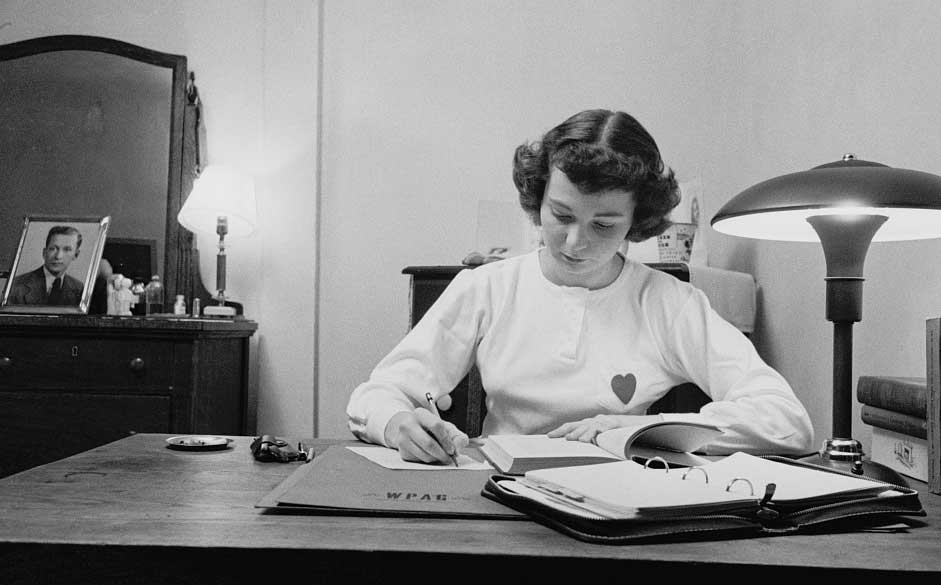
(Image credit: Stanley Kubrick, photographer, LOOK Magazine Photograph Collection, Library of Congress, Prints & Photographs Division.)
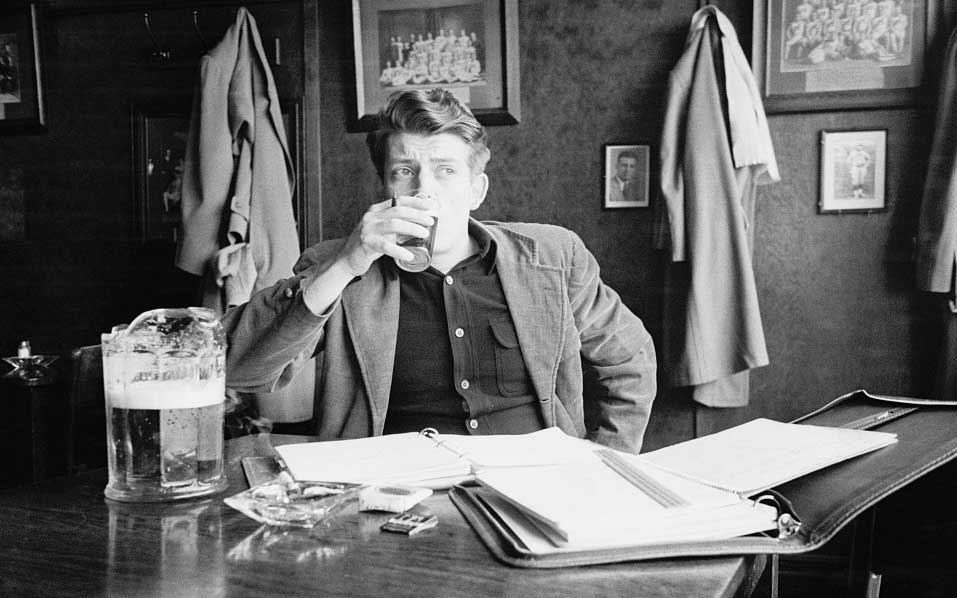
(Image credit: Stanley Kubrick, photographer, LOOK Magazine Photograph Collection, Library of Congress, Prints & Photographs Division.)
There are pictures at the start of a swimming practice, cheers during happy hour, and card games in the dorm.
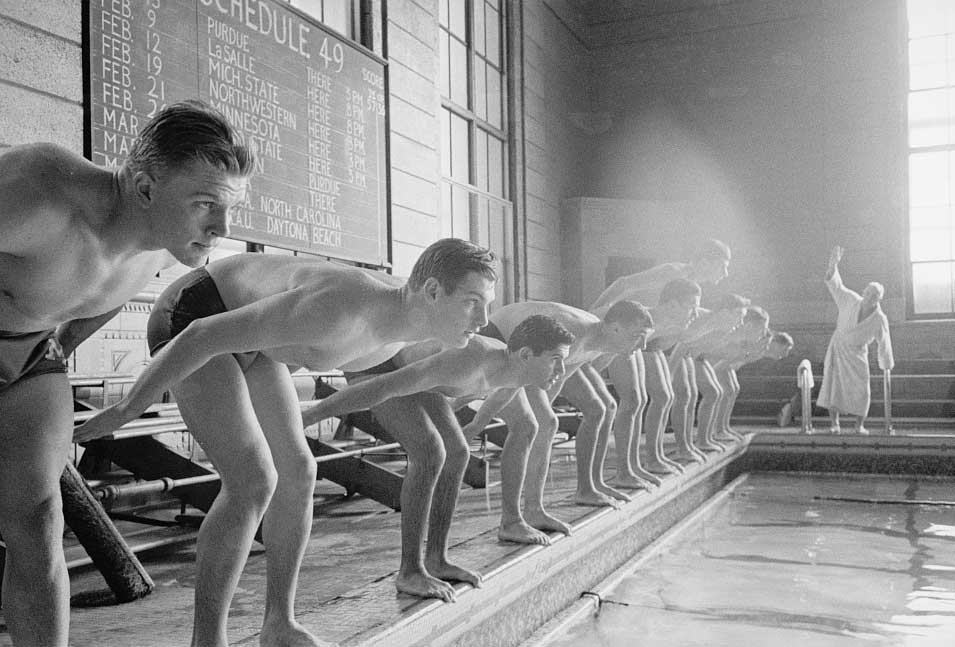
(Image credit: Stanley Kubrick, photographer, LOOK Magazine Photograph Collection, Library of Congress, Prints & Photographs Division.)
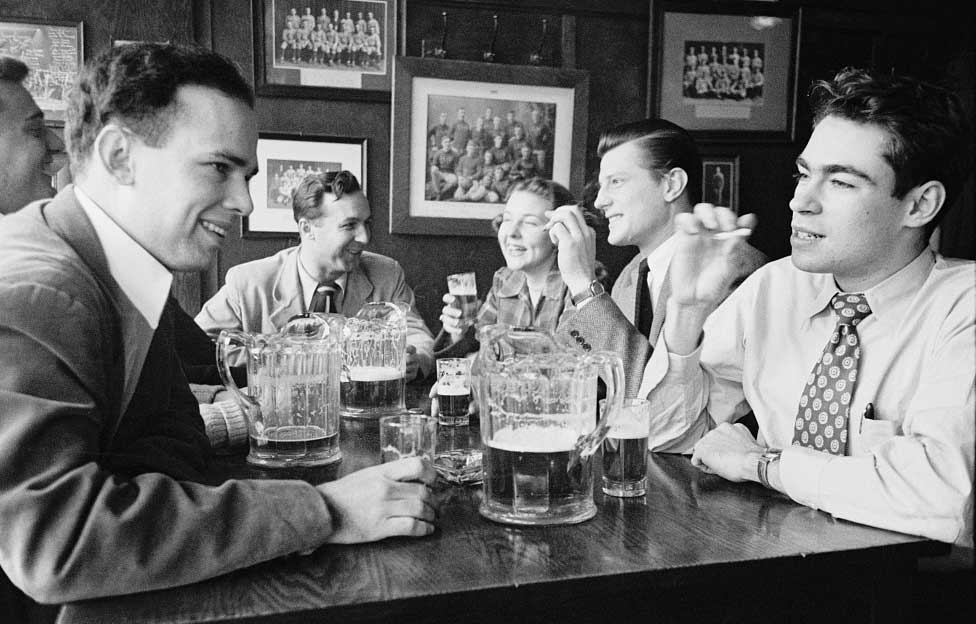
(Image credit: Stanley Kubrick, photographer, LOOK Magazine Photograph Collection, Library of Congress, Prints & Photographs Division.)
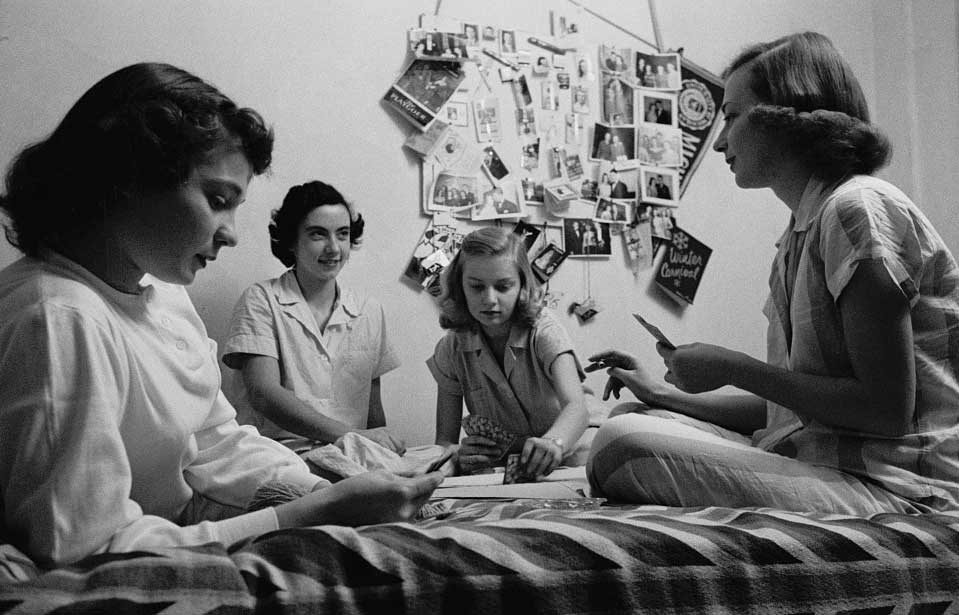
(Image credit: Stanley Kubrick, photographer, LOOK Magazine Photograph Collection, Library of Congress, Prints & Photographs Division.)
Kubrick photographed college journalists in the Michigan Daily newsroom and students dining in the Law School.
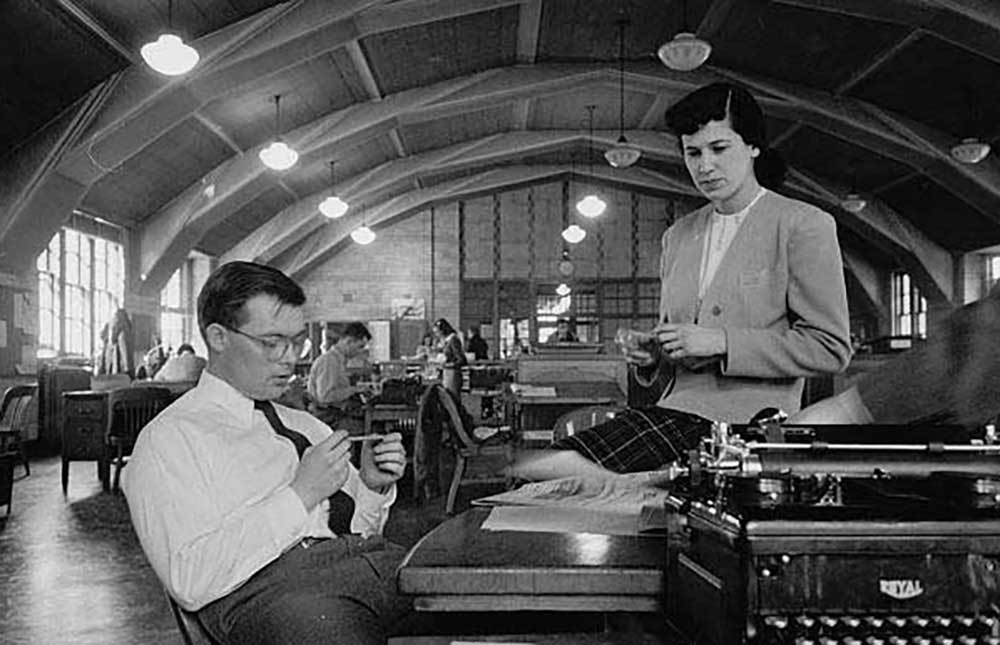
(Image credit: Stanley Kubrick, photographer, LOOK Magazine Photograph Collection, Library of Congress, Prints & Photographs Division.)
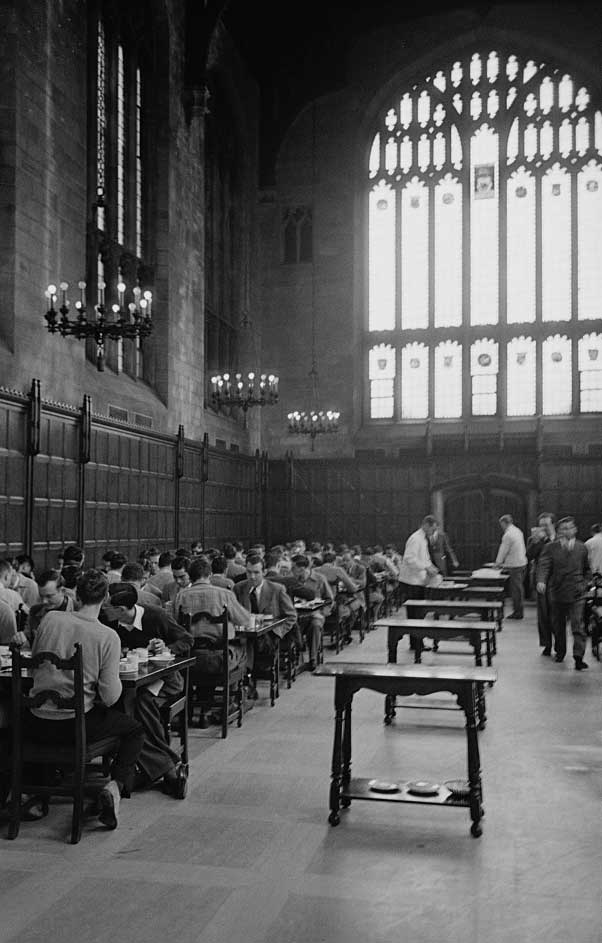
(Image credit: Stanley Kubrick, photographer, LOOK Magazine Photograph Collection, Library of Congress, Prints & Photographs Division.)
Is anybody out there?
As Kubrick went on from Look to pursue his award-winning film career, Di Mantova was on a journey of his own. He earned his masters degree in ethnography from U-M and was a fellow in anthropology and social theory at the University of London.
In addition to working in the auto industry, he has been a partner, strategic advisor or mentor to multiple startups. He also founded GenLab, an independent research organization focused on emerging technologies and knowledge creation.
Today Di Mantova is the executive director of the Interstellar Foundation. The registered nonprofit was founded in 2021 to “create messages that represent the diversity and creativity of humanity, inspire future generations of explorers, and communicate with potential extraterrestrial life,” according to the website.
The foundation was inspired by NASA’s Voyager Golden Record mission in 1977, when a recording of sounds and images portraying life on earth was launched into space in an effort to share humanity’s story with the cosmos.
A long tradition of systems thinking
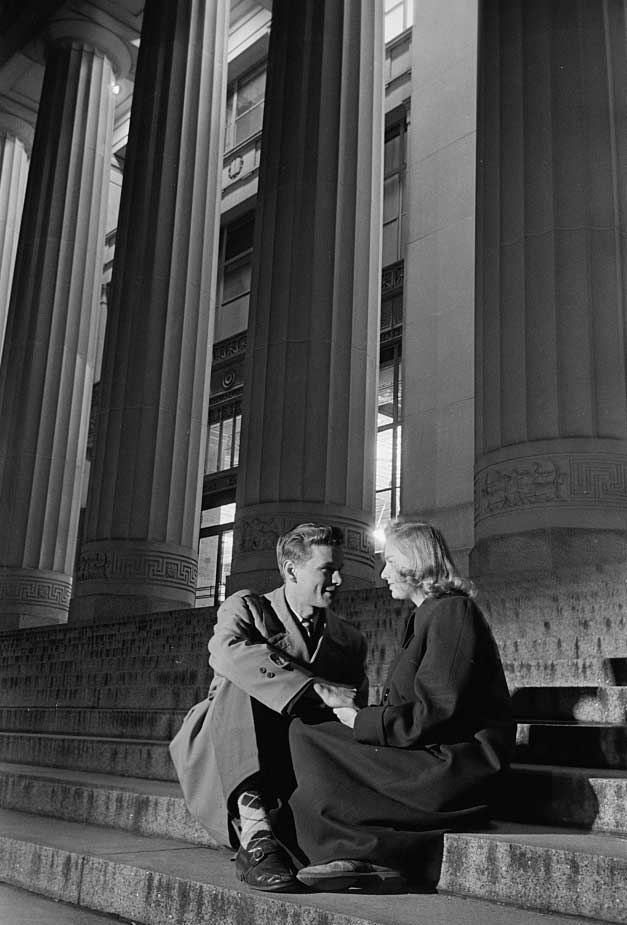
(Image credit: Stanley Kubrick, photographer, LOOK Magazine Photograph Collection, Library of Congress, Prints & Photographs Division.)
Kubrick, who died in 1999, shared Di Mantova’s fascination regarding the relationship between humans and technology, which could explain the reason he chose to photograph Crane, described in his U-M obituary as “one of the most distinguished experimental physicists of the 20th century.”
“All technology was created by humans, and it can fundamentally be shaped through human intention,” Di Mantova says. “There is nothing inevitable about the use of a technology. As a humanist, I believe both that we can create technology and control it and use it in ways that benefit our species.”
While an undergraduate at the University of Colorado Boulder, Di Mantova was introduced to Dr. Roy “Skip” Rappaport, chair in anthropology at the time, and one of the best-known anthropologists in the world. His students were required to demonstrate expertise in five disciplines: physical/biology anthropology; archaeology; linguistics; social anthropology; and cultural anthropology, Di Mantova says.
“Even more importantly we became part of a long tradition of systems thinking about humans, what they do and how they think,” he says.
That sounds a lot like the work of Stanley Kubrick.
(Lead image credit: Stanley Kubrick, photographer, LOOK Magazine Photograph Collection, Library of Congress, Prints & Photographs Division.)


david walden - 1971 73 74
I had born in Ann arbor in 1949. on campus in the old st Joe’s. my father was a returned GI studying naval architecture under the GI bill. I returned 18 years later to study naval architecture as well. I’m afraid I did not see any of the three of us in the wonderful photos. are there more?
Reply
Deborah Holdship
Here are the digitized photos that can be seen in the Library of Congress archive: https://www.loc.gov/collections/look-magazine/?q=ann+arbor
Reply
Doris Rubenstein - 1971
Having graduated in ’71, I found the pictures of dorm life 20 years before my days in MoJo and Stockwell amazingly similar to my experiences. I think that lamp was still in my single in Stockwell (4500 corridor) and the number of card games — whist, casino, canasta that I played ONLY in the dorm and never since — were major diversions before televisions were allowed in dorm rooms, not to mention cellphones! Great story.
Reply
david walden - 1971 73 74
Nice picture of the Naval Architecture Department’s towing basin in the egineering building in the LOC collection. I went on to work at the David Taylor Model Basin, to Navy’s towing basin in Carderock MD.
I knew H. Richard Crane when I returned. He was then the chairman of the physics department. As a student, I worked for William L Willams in physics.
Reply
Nancy Reed - 1966
I found this very interesting. I hope it’s eventually widely publicized. If I had a relative or friend who was at UM at this time, I’d want to see if I recognized anyone. I hope many of these people will be identified.
Reply
John Morgan - 1997
At the time that Kubrick’s photos of UM were first published in Look, The Gargoyle ran some of them in its own pages with some parody captions added, which undoubtedly counts as the first of many Kubrick parodies.
Reply
Deborah Holdship
That’s amazing. Do you still have a copy???
Reply
John Morgan - 1997
I’ve unfortunately never seen the parody in the actual issue of The Gargoyle (although I assume they maintain an archive), but Look ran a copy of it in the Letters section of their August 30, 1949 issue, which as a fanatical Kubrickian and Michigan alumnus I do own a copy of, along with the issue that Kubrick’s photos appeared in.
Reply
John Morgan - 1997
I also just realized that this article erroneously gives the date of the issue of Look in which Kubrick’s photos appeared as February 1949. In fact they appeared in the issue dated May 10, 1949, which I have in front of me right now.
Reply
Deborah Holdship
Thanks for the correct issue date. Since fixed. How lucky to own the magazine.
Reply
John Morgan Morgan - 1997
For what it’s worth, I used to keep a copy of the photo of the students on the steps of Angell Hall on my desk when I worked in the Honors Program office in Mason Hall after graduation. I was also fortunate enough to take Prof. Peter Bauland’s excellent course on Stanley Kubrick and Orson Welles when I was a student in the 1990s, which he offered many times over the years.
Reply
Daniel Harrison - 1972, 1975
To close one of the circles a bit, I recall Arthur C. Clarke visiting UM circa 1969, presumably on a brief residency. His lecture at Rackham was packed.
Reply
Jane Daining - 1952, 1984
My Dad graduated from Medical School in 1952 and my husband from Architecture in 1984. These images are a wonderful way to help imagine what Ann Arbor and UM looked like when my Dad was there. Thank you!
Reply
Mark Slobin - 1964 BA, 1969 PHD.
Great to see the Michigan Daily newsroom- I worked on one of those typewriters as a music critic only 12 years later.
Reply
Carol Cooperrider - 1976
My dad was a law student around that time (later a professor). I was wishing that was him in the law library!
Reply
Eileen Marston - 1978
My parents met at U-M after the war and graduated (and got married) in 1949. I don’t see them in these photos, but it’s nice to see that time period.
Reply
carol Rose kahn - 1978
The swim coach at the pool might be Matt Mann.
Reply
Elizabeth Holm - 1987 BSE, 1992 PhD
Loved the historic photo of metal casting in the Department of Chemical and Metallurgical Engineering foundry (called a “metallurgical workshop” in the article). The foundry was located on the top floor of the East Engineering building, and it was over 6000 square feet in size – the largest lab on campus. Considering that a foundry is a place to melt and pour liquid metal, it may be a bit surprising that it was located on the top floor, but it served the U-M community for decades before being decommissioned in the 1980s.
Although the foundry is no more, the Department of Materials Science and Engineering still teaches students how to melt and pour metal castings in the Keogh Casting Facility in our Van Vlack Undergraduate Laboratory.
Reply
Mary Pedley - 1969, 1973
One of the photos
https://hdl.loc.gov/loc.pnp/ppmscd.01162
is of Randolph Adams, Director of the Clements Library from 1923 (the library’s opening) – 1951.
Reply
David Burhenn - 1975, Law 1982
Great to see pics of the Daily newsroom and the Law School library, two places that I haunted in my time at the U. With the exception of the typewriters (I think we had Olympias),420 Maynard in 1948 looked a lot more like it did in my day than it does today.
Reply
Sarah Grusin (Coates) - 1977
In kubricks swimmers starting photo, I recognize my father Thomas B Coates (5th from the left front swimmer) and Charlie Moss (standing next to him). The white robed figure is Matt Mann, legendary swim coach. Location: IM POOL. Years ago I donated a scrapbook my grandmother kept of the UM swim teams championship year 1948 to the Bentley so I can no longer ID the rest. Most of the team has passed but there is probably a yearbook that would I’d the rest of the swimmers. Fun to see. Daughter Sarah
Reply
Jason St. Onge - '98
That first pic of the students smoking around the fire place is in the Theta Xi Fraternity House on Washtenaw. It still looks almost the exact same.
Reply
John Woodford
It struck me that the settings might as well have been in the Republic of South Africa as far as the composition of the student body we see here goes. The vestiges of slavery, Jim Crow and ethnocentrism have been greatly reduced in the decades since these photos were taken.
Reply