

It seemed so funny to me
Anthropologists, psychologists, and sociologists have long studied laughter to determine whether it delivers health or healing effects. In the last 50 years, the research has begun to show some interesting findings.
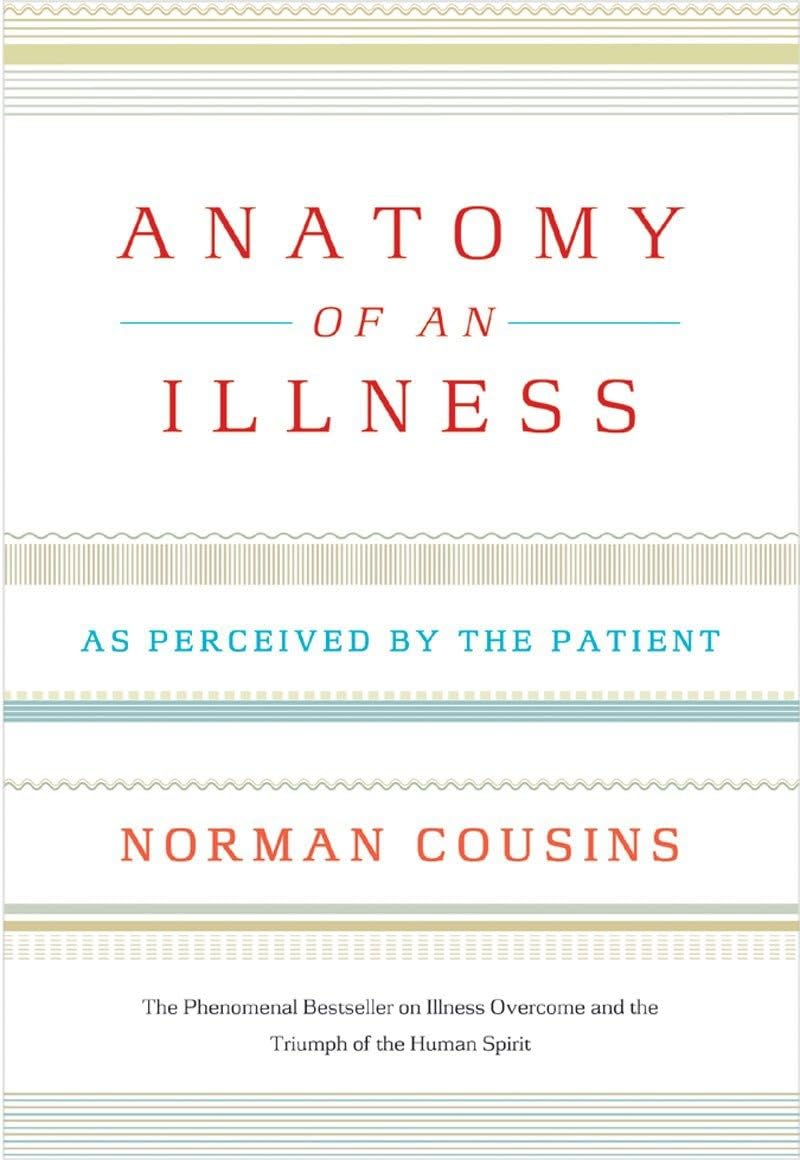
(W.W. Norton & Company.)
In the 1970s, Norman Cousins, an influential American political journalist, author, professor, and world peace advocate, published Anatomy of an Illness as Perceived by the Patient: Reflections on Healing and Regeneration. Cousins had been diagnosed with a chronic, painful, and debilitating disorder for which conventional medicine had little to offer. So he prescribed his own therapy — liberal doses of vitamin C and laughter — that he claimed created a pain-analgesic effect for him. For laughter, Cousins relied on Marx Brothers films like “Animal Crackers” (highly recommended), and reruns of TV’s “Candid Camera” (also highly recommended). And while Cousins’ doctors expressed skepticism, he laughed his way to recovery.
At about the same time, the first research studies appeared in the literature suggesting a link between mind and body — specifically, the interaction and link of human psychology with immune system function(s).
Could it be that one’s emotions could affect one’s immune system, resulting in healing?
Laughter as a potential therapeutic option has since gained momentum in popular culture. It also has interested researchers in the field of psychoneuroimmunology, where scientists explore complex interactions between the brain, nervous system, immune system, endocrine system, and different emotions on human physiology and psychology.
What is laughter?
Laughter is a natural, physical, and emotional expression of joy, amusement, or happiness that involves making vocal sounds while modulating an outward breath in response to the environment, situation, or stimuli.
It is possible to identify five separate types of laughter:
- Genuine or “spontaneous”
- Self-induced or “simulated”
- Stimulated, which could be from tickling
- Induced, sometimes via drugs
- Pathological, which is a disorder of emotional expression due to brain damage
Laughter can be experienced individually or with others. Some fitness enthusiasts even participate in yoga laughter groups.
Health benefits of laughter
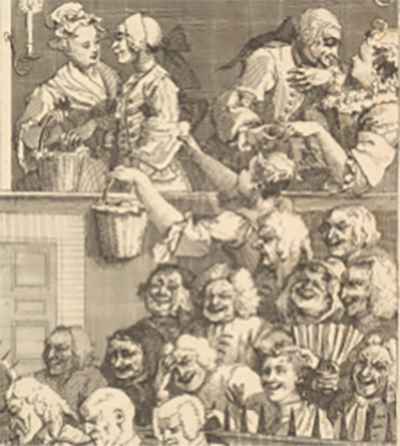
“The Laughing Audience,” 1733 etching by British artist William Hogarth. (William Hogarth, Metropolitan Museum of Art.)
Research, now published over several decades, establishes that laughter provides significant health benefits via psychological, physiological, and social pathways. The adage “laughter is the best medicine” may be colloquial but one possible origin is the Bible’s Proverbs 17:22: “A merry heart doeth good like a medicine: But a broken spirit drieth the bones.” That said, modern beliefs and research — both observational and experimental — show laughter’s positive effects on stress reduction, cardiovascular health, immune function, pain tolerance, and emotional well-being.
Current evidence indicates that laughter’s health effects arise from both direct biological changes and indirect behavioral changes. Mechanisms include reduction of stress hormones, activation of parasympathetic nervous system that promotes relaxation, improved digestion, and reduced stress by counteracting the “fight-or-flight” response. These effects produce similar physiological and psychological benefits in both healthy and clinical populations. Effects tend to be immediate and short-term; thus, regular laughter may be needed for sustained health benefits.
Laughter’s physiological benefits
Laughter produces measurable physiologic changes throughout the body. For example, laughter increases heart rate, stroke volume, and oxygen consumption — similar in some ways to the effects of light exercise.
Laughter stimulates the release of endorphins (the body’s natural feel-good hormones) and activates the dopaminergic reward system (a brain network that uses the neurotransmitter dopamine to reinforce behaviors essential for survival and to create feelings of pleasure and motivation), boosting mood and promoting relaxation. Laughter therapy is shown to reduce stress hormones, most notably cortisol. A 2023 meta-analysis of clinical trials found laughter interventions decreased cortisol by around 32–37% compared to control groups, suggesting a direct effect on an individual’s stress response.
Burst out healthing
Other research indicates that during and shortly after laughing, an increase occurs in such components of immunity as serum immunoglobulins (IgA, IgE), natural killer cells, and plasma serotonin. Inflammation markers and pro-inflammatory cytokines (e.g., IL-6, TNF-alpha) tend to decrease. One study examined the stress-hormone levels of 10 subjects watching an hour-long comedy. Among experimental subjects, cortisol decreased significantly compared to control subjects who watched an hour-long drama.
The SMILES study used humor therapy as “medication” to treat agitation in patients with dementia and found a 20% reduction in agitation using humor therapy. That is an improvement comparable to the use of antipsychotic drugs, but without the side effects. Agitation levels remained lower at the 26-week follow up. In this study, humor therapy used trained staff as “laughter bosses” to act much like “clown doctors” on childrens’ hospital wards to help improve mood and increase lightheartedness.
Other research suggests short bursts of laughter lead to improved circulation by increasing the ability of arteries to dilate, which benefits blood flow and reduces cardiovascular risk.
Laughter’s psychological and social well-being benefits

Children, especially grandchildren, can inspire laughter with their wacky behavior. (Image courtesy of Victor Katch.)
Laughter has pronounced effects on mental health and social connection; it has been demonstrated to decrease anxiety, depression, and even pain perception. Studies in cancer, psychiatric conditions (e.g., schizophrenia), and chronic pain groups have, likewise, shown laughter therapy lowers fatigue, stress, and depressive symptoms.
Not surprisingly, laughter promotes group bonding, social cohesion, and feelings of safety — critical factors in overall well-being. It can reduce loneliness and support healthy relationships, especially among older adults or those dealing with chronic illness. Programs such as laughter yoga (see lead image above) and laughter therapy have been adopted in clinical settings for rehabilitation and chronic disease management, with participants reporting enhanced quality of life and greater psychological resilience.
Other studies have linked laughter and humor with increased levels of pain tolerance. In one study, 200 participants were subjected to a painful cold-pressor stimulus after being shown a film. Those who viewed a humorous film had a significant increase in pain tolerance. In an experiment about threat-induced anxiety, 53 participants awaited delivery of an electric shock. Subjects exposed to a humorous recording consistently rated themselves as less anxious; they also reported smaller increases in stress, even as the time for the shock grew closer.
In another study using laughter yoga, 60 depressed geriatric patients were randomized to receive laughter yoga therapy, exercise therapy, or nothing. Both laughter yoga and exercise therapy groups had a significant decrease in depression scores compared to the control group. Moreover, the laughter yoga group had an increase in life satisfaction compared to the control group. Interestingly, no significant differences were found between the laughter yoga and exercise groups.
Let’s get laughing to improve health

“Who’s on First” is an iconic comedy routine originated by the duo Abbott and Costello.
Laughter — whether spontaneous or deliberate — reduces stress, improves immune and cardiovascular function, enhances pain tolerance, and bolsters emotional well-being. Programs that promote regular laughter can contribute to both physical and mental health, supporting a comprehensive approach to wellness alongside conventional medical care.
Plus, laughing is just plain fun. It feels good. It doesn’t have to cost a cent. And in a crazy, chaotic world, it’s a welcome relief to the alternative.
References
- Bennett, M.P., et al. “The effect of mirthful laughter on stress and natural killer cell activity. “Alternative Therapies, Health, and Medicine. 2003;9(2):38-45.
- Berk, L.S., et al. “Neuroendocrine and stress hormone changes during mirthful laughter.” The American Journal of the Medical Sciences. 1989;298:390-396.
- Black, D.W. “Laughter.” Journal of the American Medical Association. 1984; 252(21):2995–8.
- Boone, T., Hansen, S., Erlandson, A. “Cardiovascular responses to laughter: A pilot project.” Applied Nursing Research. 2000;13:204-208.
- Brodaty, H., et al. “Successful ingredients in the SMILE study: Resident, staff, and management factors influence the effects of humor therapy in residential aged care.” The American Journal of Geriatric Psychiatry. 2014;22(12):1427-37.
- Cousins, N. “An anatomy of an illness.” New York, NY: WW Norton; 1979.
- Dunbar, R.I.M., et al. “Social laughter is correlated with an elevated pain threshold.” Proceedings of the Royal Society B: Biological Sciences. 2012;279:1161-1167.
- Foley, E., et al. “Effect of forced laughter on mood.” Psychological Reports. 2002;90(1):184.
- Gelkopf, M., et al. “The effect of humorous movies on in patients with chronic schizophrenia.” The Journal of Nervous and Mental Disease. 2006;194:880-883.
- Goodenough, B., et al. “Study protocol for a randomized controlled trial of humor therapy in residential care: The Sydney Multisite Intervention of LaughterBosses and ElderClowns (SMILE).” International Psychogeriatrics. 2012;24(12):2037-44.
- Hirosaki, M., Ohira, T., Kajiura, M., et al. “Effects of a laughter and exercise program on physiological and psychological health among community-dwelling elderly in Japan: Randomized controlled trial.” Geriatrics & Gerontology International. 2013;13:152-160.
- Iwase, M., et al. “Neural substrates of human facial expression of pleasant emotion induced by comic films: A PET study.” NeuroImage. 2002;17:758-768.
- Jacka, F.N., et al. “The SMILES trial: An important first step.” BMC Medicine. 2018;16(1):237.
- Mora-Ripoll, R. “The therapeutic value of laughter in medicine.” Alternative Therapies, Health and Medicine. 2010;16(6):56-64.
- Panksepp, J. “Beyond a joke: From animal laughter to human joy?” Science. 2005;308(5718):62.
- Shahidi, M., et al. “Laughter yoga versus group exercise program in elderly depressed women: A randomized controlled trial.” The International Journal of Geriatric Psychiatry. 2011;26:322-327.
- Takahashi, K., et al. “The elevation of natural killer cell activity induced by laughter in a crossover-designed study.” International Journal of Molecular Medicine. 2001;8:645-650.
- Yovetich, N.A., et al. “Benefits of humor in reduction of threat-induced anxiety.” Psychological Reports. 1990;66:51-58.


Sljaka Zaposljavanje - 2020
This is a brilliant deep dive into the physiological benefits of laughter. Victor Katch makes an excellent point about laughter’s ability to counteract the ‘fight-or-flight’ response, which is unfortunately a common state for many in high-stress professional environments today. At sljaka.com, we often see how a positive company culture that encourages lightheartedness and social cohesion leads to better employee retention and long-term mental health. Integrating humor into professional settings—much like the SMILES study suggests for clinical ones—could be a cost-free way to improve national workforce productivity and resilience. Thanks for sharing these insights!
Reply
Ronald Fox - Ph’D 1973
Vic,
Given all the laughs we had in Sweden, we should live to eternity.
Reply