
Oct. 24, 2025
Dear Alumni, Students, and Colleagues:
At the University of Michigan, we have a rich legacy of supporting the economy.
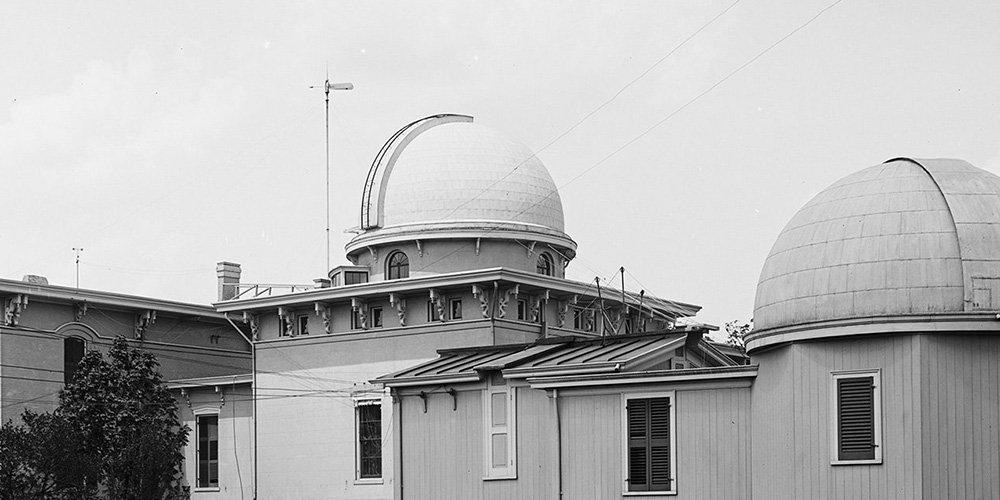
The Detroit Observatory. (Image courtesy of U-M’s Bentley Historical Library.)
More than 170 years ago, business leaders in Detroit needed help. Specifically, they needed more accurate timekeeping for railroads, which were the lifeblood of many industries.
At the same time, the University’s president asked business leaders to support the mission of research and science.
The result was that the business community stepped forward to fund a new observatory on the Ann Arbor campus. Astronomical science enabled accurate timekeeping, which improved shipping arrivals and departures. And the University of Michigan had a cutting-edge laboratory to create new knowledge.
The building with its magnificent telescopes still stands today. It is called the Detroit Observatory, in honor of its benefactors, and is the oldest research facility on our campus. It embodies collaboration for the improvement of society.
Ripple effect
When our scientists and researchers receive federal funding, those dollars have a tremendous ripple effect on the economy. This past year, our University spent over $332 million on goods and services to support federally funded projects. That meant hiring services, purchasing materials and equipment, and renting space in cities and towns throughout our state — and it happens every year.
This type of impact is amplified when considering that our state has four R1 research universities, whose collective economic impact from federal R&D funding exceeds $8.3 billion.I strongly encourage business, community, and alumni leaders to join us in advocating for the contributions and impact of research universities, as well as the partnerships we build with businesses, industry, and nonprofits.
We all benefit from a robust higher education ecosystem.
Return on investment
Higher education in this country is currently under attack. I believe it is an assault grounded in misinformation and misunderstanding. Our universities transform a public investment into a public good. This includes supporting communities and economies through our discoveries and the talents of our graduates. Every year, employers can tap into thousands of the world’s top students who graduate from our three campuses.
Here’s something else to remember about partnering with higher education: Universities don’t move. We don’t pull up stakes and relocate to other countries. At the University of Michigan, we are firmly committed to our three home communities, the state of Michigan, and the nation. We are dedicated to the common good.
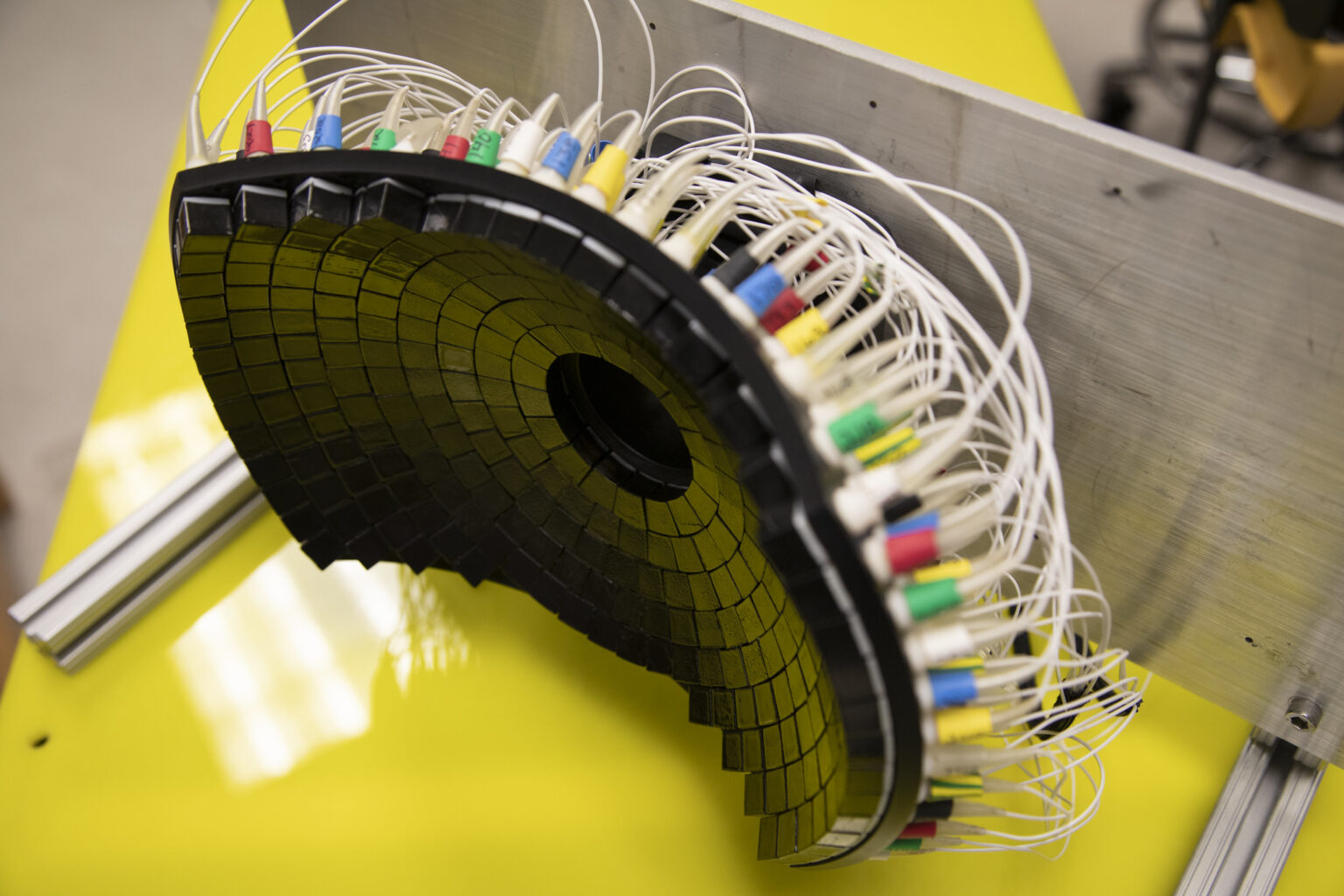
The 700kHz, 260-element histotripsy ultrasound array transducer. (Image credit: Marcin Szczepanski, Michigan Engineering.)
I’d like to share one of the most inspiring stories of recent economic impact and success.
Twenty years ago, several researchers at U-M developed a radical method for noninvasive surgery. They used focused ultrasound waves to target and destroy tissue like cancerous tumors.
The researchers called this new method histotripsy. A U-M startup company, HistoSonics, is commercializing histotripsy and this completely non-invasive form of surgery.
Two years ago, they obtained FDA approval to use histotripsy to eradicate liver tumors. Today, they have clinical trials underway to expand the use of this technology to tumors of the pancreas and kidney.
Last year the company celebrated the opening of its advanced R&D facility in Ann Arbor where they anticipate adding 40 high-growth jobs.
Then, just last month, a group of public and private investors acquired HistoSonics for an astounding $2.25 billion. An idea launched in a University of Michigan laboratory sold for more than $2 billion.
Investment to impact
Patients are receiving highly effective treatment that is relatively painless and requires less time in the hospital.
Ann Arbor has an R&D company that continues to thrive, as HistoSonics now plans to apply its technology to kidney, pancreas, and prostate cancers with more disease areas in the future.
And the University of Michigan has yet another proof point of how it energizes the local and state economy.
A robust economy — one that draws upon university resources and talent — translates to well-paying jobs, good neighborhoods, and strong schools. That is genuine impact.
We are here to serve society. Over 200 years ago, we were founded in the public interest, and this mission has been our core ever since.
Look to Michigan for discovery and collaboration.
Look to Michigan for talent and technology.
And look to Michigan, and all of higher education, as a valued partner in building and sustaining vibrant economies.
Thank you, and Forever Go Blue.
Domenico Grasso, PhD
President
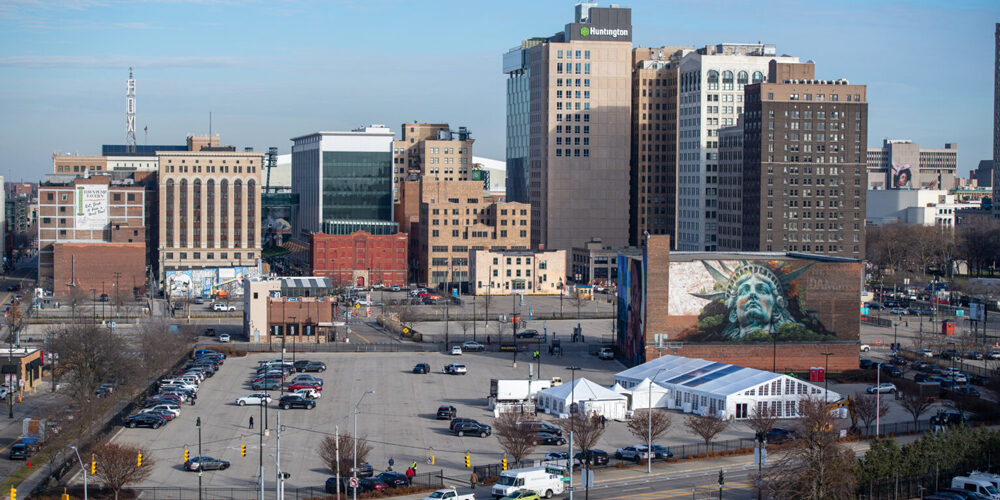
(These remarks have been edited and are culled from a September 2025 keynote presentation at the International Economic Development Council in Detroit. The lead image shows the site of the future U-M Center for Innovation, set on two acres of this parking lot, a donation of land from Olympia Development. Image credit: Eric Bronson, Michigan Photography.)