
Face to face
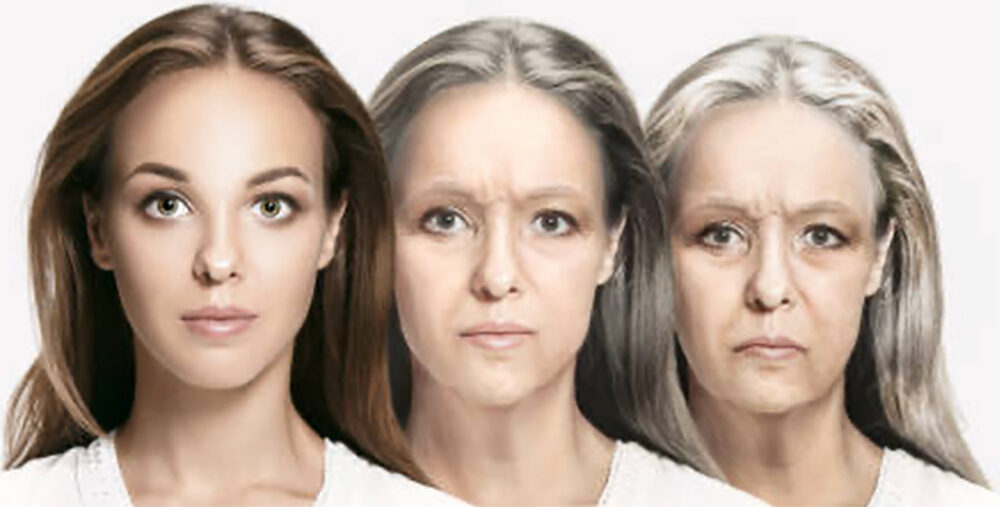
In a previous Health Yourself column on facial rejuvenation, I discussed the many causes and dermatologic treatments for facial aging.
Interventional treatments include surgical facelifts, creams and lotions, Botox, dermal fillers, radiofrequency with microneedling, and laser treatments. I mentioned briefly how facial exercises also reduce facial aging.

(Selfie courtesy of the author.)
Much to my amazement, I received more email questions regarding this article than most. Readers wanted to understand more about the causes of facial aging and more specific details regarding the facial exercises they could try.
This particularly hits home with me. Lately, I’ve been looking in my mirror and hardly recognize the face staring back at me.
Surely, that person isn’t me? Naw, it’s someone else for sure. That person has longer ears; almost no lip volume; a slightly drooping tip of the nose; too many wrinkles and fine lines to count; sagging skin, especially around the eyes and mouth; a different, sagging jawline; age spots everywhere they are not supposed to be, and the ever dreaded “turkey flop”—a terribly accurate alias for that sagging, under-the-chin skin.
Changing faces
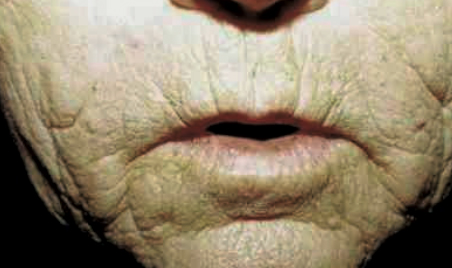
With aging, facial changes might include any or all of the following:
- Wrinkles
- Sagging skin
- Pigmentation
- Rough keratotic papules (small bumps centered on small hair follicles)
- Telangiectasia (also known as spider veins, those small, dilated blood vessels that can appear on the skin, mucous membranes, or whites of the eyes)
- Comedones (small bumps that form when a hair follicle becomes clogged with oil and keratin, a type of acne that can occur with or without other symptoms).
(Image: iStock.)
Wow. This is getting depressing!
Facial aging is caused by both internal and external causes.
- Aging involves a decline in skin elasticity due to decreased collagen production.
- Hormone imbalance involving decreased estrogen and growth hormone production also reduces skin collagen.
- Ultraviolet radiation (sunlight) absorbed by skin cells generates excess reactive oxygen species that causes oxidative stress that damages skin DNA.
- A high-fat diet can induce oxidative stress and skin inflammatory responses that decreases protein synthesis and causes skin changes.
- A close association between consumption of sugars and fried foods and acceleration of skin aging also has been established.
- Alcohol consumption has been shown to speed-up skin aging.
- Smoking represents the most common lifestyle habit that adversely affects facial aging. Each pack of cigarettes smoked per year increases wrinkle development risk more than five-fold.
- Sleep dysfunction and excess stress also has been shown to increase skin damage.
Targeted exercises you can do
Some research suggests that targeted facial exercises can reduce skin sagging by increasing muscle tone resulting in tightened skin and thus reduced wrinkles.
Targeted facial exercises also have been shown to improve drainage of waste materials and regeneration of tissues as a result of improved blood and lymph circulation.
In one study, researchers found that a group of middle-aged women looked about three years younger after they followed a 30-minute facial exercise routine for 20 weeks. Participants, 40-65 years old, performed 32 facial exercises, each one for about a minute. They repeated the exercises every day for the first month, and then every other day for five months.
Over the course of the 20 weeks, the 16 participants were enthusiastic about their results, perceiving improvements in almost all of their facial features. An independent panel of dermatologists confirmed the personal evaluations by rating the “after” photographs, on average, three years younger than the “before” photographs.
Note: A significant short-coming of this study was the lack of a control group.
Despite the need for more comprehensive large-scale studies, there is sufficient anecdotal evidence and some research suggesting that some people may benefit from facial exercises. Thus, it seems worth the effort — and certainly can’t do any harm.
Try these general facial exercises and see if they work for you
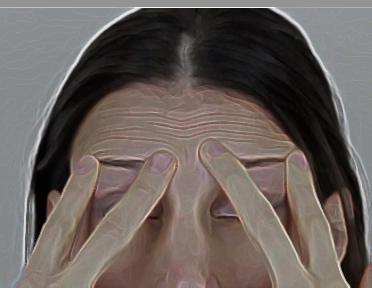 Brow up-and-down lift
- Using two fingers in a peace sign, place over each eyebrow and gently push down to close eyes.
- Push your brows up and down against finger pressure.
- Repeat 10 times.
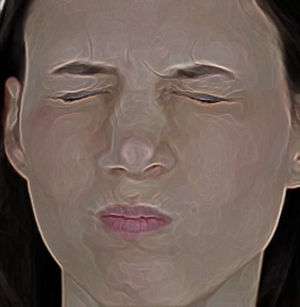 Eye, nose, and mouth squeeze
- Close eyes, raise up and squinch nose, checks, and mouth as tight as possible
- Hold for 3 seconds.
- Bring face back to relaxed position.
- Repeat 10 times.
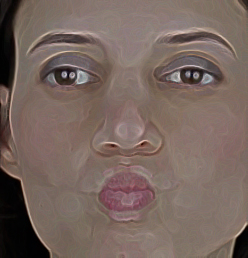 Pucker-up to tighten sagging jowls
- From a relaxed facial position, pucker lips, suck in checks, and jut jaw forward as far as possible.
- Hold for 5 seconds.
- Bring face back to relaxed position.
- Repeat 10 times.
 Mouth and jaw exercises
- Tilt head back.
- Place fist under chin.
- Open mouth as far as possible while applying gentle upward pressure with fist.
- Repeat 5 times increasing pressure each time.
Double chin and the dreaded ‘turkey flop’
A double chin develops when a layer of adipose tissue (fat) forms beneath the jawline. This fat (termed submental fat) creates one or more rolls giving the appearance of having more than one chin. A double chin often develops during gain weight, but can also result from loose skin after weight loss. Reduced skin elasticity also can cause a double chin and most often associates with aging.
Since a double chin is essentially stored body fat, the only way to get rid of it is to lose fat. But with age, losing weight (and fat) causes excess skin that hangs below the chin. So, for many of us “older folks” we’re either doomed to have a double chin or a “turkey flop.”
Three exercises to tighten and strengthen chin and neck muscle
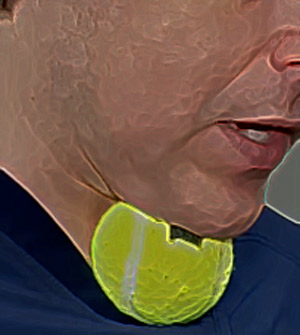 Chin ball squeeze
- Seated or standing, place a ball (tennis ball or rubber stress ball) beneath your chin. Be sure not to press into the throat.
- Tuck chin in and press down to squeeze the ball against the upper chest.
- Hold for 3-5 seconds, relax, and repeat for 10-15 repetitions.
- To make this exercise more challenging, use a harder ball or squeeze the ball harder.
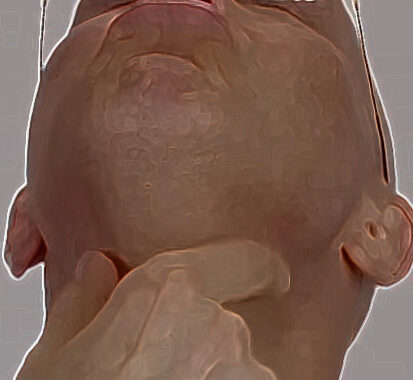 Chin lifts
- Standing, place hands just below the chin.
- Raise chin while tilting head backwards.
- Pucker lips and try to raise head upward.
- Hold for 3-5 seconds. Relax. Repeat 10 times.
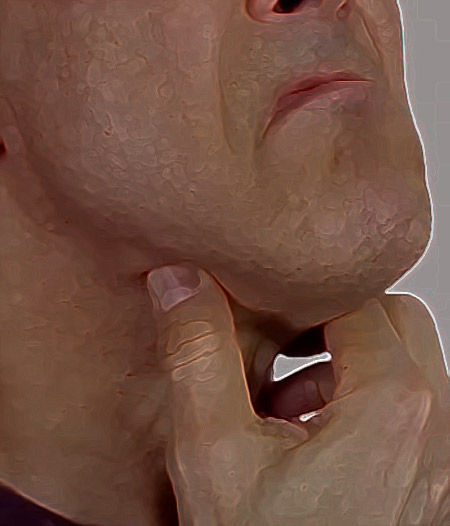 Jaw jut
- Sit or stand. Place hands just below the chin.
- Pull shoulders back and actively “jut” your jaw outward as far as possible.
- Hold for 3-5 seconds. Relax. Repeat 10 times.
Summary
Reversing natural facial aging is nearly impossible. But it maybe possible to slow it down and improve the skin’s appearance through lifestyle choices and consistent skincare.
Key steps include:
- Daily application of broad-spectrum sunscreen when outdoors in the sun
- Avoiding smoking
- Avoiding tanning
- Eating a balanced diet rich in antioxidants
- Staying hydrated
- Using skincare products with ingredients like retinoids, peptides, and vitamin C.
And of course, daily facial exercises can help.
References:
- Baumann, L. “Skin aging and its treatment.” The Journal of Pathology. 2007;211:241.
- Bergfeld, W.F. “The aging skin.” International Journal of Fertility and Women’s Medicine. 1997;42(2):57.
- DeVos, M.C. et al. “Facial exercises for facial rejuvenation: A control group study.” Folia Phoniatrica et Logopaedica. 2013;65(3):117-22.
- Ekiz, O., et al. Factors influencing skin aging in a Mediterranean population from Turkey.” Clinical and Experimental Dermatology. 2012;37(5):492.
- Farage, M.A., et al. “Intrinsic and extrinsic factors in skin aging: A review.” The International Journal of Cosmetic Science2008;30(2):87.
- Guinot, C., et al. “Relative contribution of intrinsic vs extrinsic factors to skin aging as determined by a validated skin age score.” Archives of Dermatological Research. 2002;138:1454.
- Hersant, B., et al. “Assessment tools for facial rejuvenation treatment: A review.” Aesthetic Plastic Surgery. 2016;40(4):556.
- Kennedy, C., et al. “Effect of smoking and sun on the aging skin.” The Journal of Investigative Dermatology. 2003;120(4):548.
- Koh, J.S., et al. “Cigarette smoking associated with premature facial wrinkling: Image analysis of facial skin replicas.” The International Journal of Dermatology. 2002;41(1):21.
- Leung, W.C., Harvey, I. “Is skin aging in the elderly caused by sun exposure or smoking?” The British Journal of Dermatology. 2002;147(6):1187.
- Van Borsel, J., et al. “The effectiveness of facial exercises for facial rejuvenation: A systematic review.” Aesthetic Surgery Journal. 2014;34(1):22.
- Windhager, S., et al. “Facial aging trajectories: A common shape pattern in male and female faces is disrupted after menopause.” American Journal of Physical Anthropology. 2019;169(4):678.
- Zimbler, M.S., et al. “Anatomy and pathophysiology of facial aging.” Facial Plastic Surgery Clinics of North America. 2001;9(2):179.

