Galleries

  1. Spring fling 2026

    Spring has sprung—sort of—on the University of Michigan campus. Enjoy these scenes from a busy season that saw a parade of national champions, conferral of the 1 millionth U-M degree, and anticipation for the next big bloom of peonies at Nichols Arboretum.
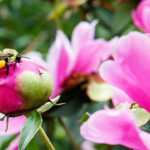
    • A bright pink peony bud with a bee perched on top. Nichols Arboretum at the University of Michigan, Ann Arbor.
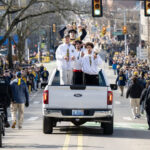
    • Members of the University of Michigan men's basketball team strand in the flatbed of a white pickup truck traveling down State Street as they celebrate their 2026 NCAA championship victory.
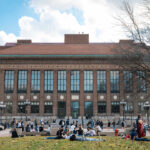
    • Students flock to the lawn in front of the Hatcher Graduate Library, even though the trees have yet to bloom. University of Michigan, Ann Arbor.
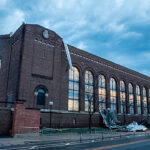
    • Image shows damage to Yost Ice Arena after two tornadoes touched down in Ann Arbor April 14, 2026. The first touched down at 1:44 a.m. near the Interstate 94 eastbound entrance ramp at Jackson Avenue. The second touched down two minutes later at the intersection of West William Street and Fourth Street near the Argus Building. The tornadoes were both EF1, which corresponds with winds of 86-110 mph. Pieces of the metal roof litter the sidewalk along State Streeet. (Image credit: Michigan Commons.)
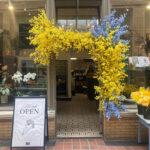
    • The University Flower Shop in Ann Arbor's Nickels Arcade was all maize and blue during Graduation week at University of Michigan in May 2026.
    • Top of a student's graduation mortarboard reads: Never tell me the odds. University of Michigan, Ann Arbor, 2026.
  2. Shock the world, boys

    The Wolverines' victory in the 2026 NCAA Men's Basketball Championship is the second in program history, with the 2025-26 team joining the 1988-89 squad. Dusty May's impressive team earned their program-record 37th win in the process, which also ties the Big Ten record for most wins in a season and delivered the conference its first national title since 2000. Don't miss the victory parade, starting at 10 a.m. Saturday. (Captions sourced from mgoblue.com and MGoBlueTV. All images are by Michigan Photography. Relive the journey at "How We Got Here" from Michigan Athletics.)
    • 2026 University of Michigan men's basketball team celebrates 2026 NCAA national championship win.
    • U-M basketball player Morez Johnson sinks a basket during the 2026 NCAA championship tournament.
    • U-M Basketball players Lendeborg and McKenney share a laugh in the lockerroom during the 2026 NCAA national championship.
    • U-M player updates the 2026 NCAA championship tournament bracket.
    • Four University of Michigan basketball players chat at center court.
    • Elliot Cadeau shows off his No, 3 jersey.
  3. Common Sense at 250

    In 2026, going viral refers to a piece of content spreading rapidly across the internet and developing into a widespread sensation. In early 1776, Thomas Paine's "Common Sense: Addressed to the Inhabitants of America" did just that, no wi-fi required. Historians generally agree that Paine's pamphlet was reprinted more than any other title in colonial America. The William L. Clements Library, which holds 58 editions of the viral pamphlet, presents the student-curated exhibit "Revolutionary Paine" through May. (Click any image to enlarge. All images are courtesy of the Clements Library.)
    • Title page of the anonymously published "Common Sense: Addressed to the Inhabitants of America," printed and sold in 1776 by R. Bell, Philadelphia.
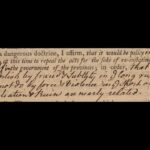
    • British first edition of Paine's "Common Sense," London 1776 showing how portions critical of the British monarchy were removed to prevent the government from prosecuting the publisher for sedition or treason. Readers or sellers often filled in the censored portions with the original text.
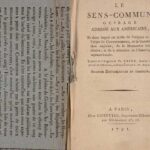
    • 1791 French edition, "Le Sens-Commun," shows how Paine's ideas in "Common Sense" resonated amid the upheaval of the French Revolution.
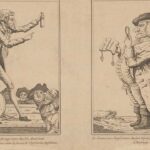
    • Satirical French engraving of the "famous Anglo-American empiricist" derides Paine as a quack physician peddling independence as a remedy for oppression. On the right is "the Anglo Peace Commissioner appointed to deal with the United States of America."
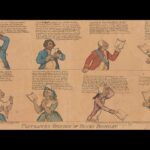
    • "Contrasted Opinions of Paine's Pamphlet" is a hand-colored engraving by Frederick George Byron (1791) featuring revolutionary figures in the Americas and Europe.
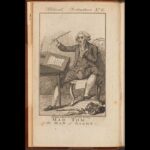
    • Satirical portrait of Thomas Paine depicted as "Mad Tom."
  4. Window watchers

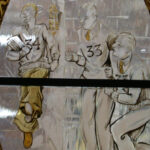
    Stained-glass windows tend to depict pious personalities and religious themes. But some of the windows at Michigan Law put a twist on that tradition, featuring humorous scenarios that blend art and the law. Next time you walk through Hutchins  Hall, keep an eye out for such stained-glass crime scenes as forgery, larceny, and malicious mischief. Not a saint to be found! View more windows at Michigan Law's Scholarship Repository. (Content courtesy of Dustin Johnston at Michigan Law.)
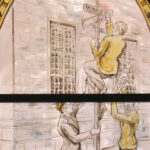
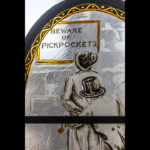
    • The crime is larceny: A man is pickpocketed as he reads a sign that says "Beware of Pickpockets."
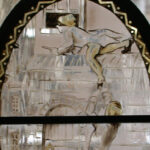
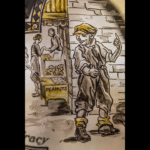
    • Image on a stained glass window at Michigan Law depicts a mischievous boy with conspiracy on his mind.
  5. Raoul Wallenberg house: A most unlikely monument

    Early on a cloudless November morning, curious onlookers gathered near the intersection of Division and Jefferson streets to witness a poignant moment in U-M history. Bundled against the cold, they watched skilled crews lift a shaggy student residence off its original foundation, haul it a few blocks through Ann Arbor, and plant it in a new location. One trio of observers who'd advocated to save the structure paid especially close attention to the move: U-M retirees John Godfrey and Ken Fischer, and O'Neal Construction founder Joe O'Neal. The house had been home to World War II hero Raoul Wallenberg, BA '35, credited with saving thousands of Jews from the Holocaust. (Photos by Dieu-Nalio Chery, Michigan Photography.)
    • A local Ann Arbor woman rides her bike with baby on board as they pass the Wallenberg House in its new location at Division and Jefferson streets in Ann Arbor.
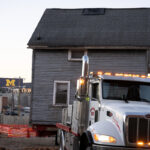
    • Massive semi pulls a house from its original foundation in Ann Arbor to a new location. University of Michigan stadium is in the background.
    • Sign inside shabby house reads: This house is being saved. Do not damage."
    • Construction worker winds cable attached to Wallenberg House before the structure is moved from one location in Ann Arbor to another. Michigan Stadium is visible in the background.
    • Truck begins driving on Madison Street with Raoul Wallenberg house on flatbed.
    • Overhead view of the foundation where the Raoul Wallenberg house was moved next door to the Arthur Miller house at Division and Jefferson in Ann Arbor.
  6. For all ages

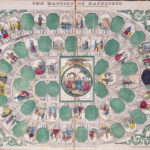
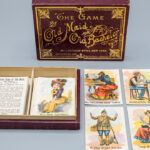
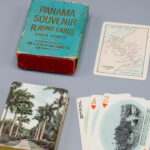
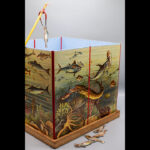
    With the development of color printing processes and new ideas about childhood and education, the 19th century made it possible and profitable to mass-produce games and toys with a focus on practical skills, moral lessons, and entertainment. The William L. Clements Library is highlighting familiar and unique toys and board games from throughout American history in their new interactive exhibit, “For All Ages.” Enjoy these vintage images, and see the exhibit in person through Dec. 23. The next time you sit down for game night, take a moment to reflect on the long tradition of games in America. (All images courtesy of U-M's Clements Library.)
    • Vintage board game: Mansions of Happiness. Salem: S. B. Ives. Boston: D.P. Ives & Co. 1864.
    • Vintage game: The Game of Old Maid and Old Bachelor. New York: McLoughlin Bros. 1892.
    • Vintage card gameL Panama Souvenir Playing Cards: Gold Edges. Cincinnati: The U.S. Playing Card Company. 1910. | Columbian Souvenir Playing Cards. Chicago: G.W. Clark. 1893
    • Vintage: Magnetic fish pond. New York: McLoughlin Bros. 1891.
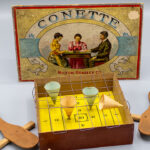
    • Vintage board game called Connette. Springfield: Milton Bradley Co. Circa 1898.
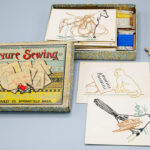
    • Vintage craft kit: Picture Sewing: Embroidery for Little Hands. Springfield: Milton Bradley Co. Circa 1900.
  7. Go big, and go home

    The skyline on U-M's Ann Arbor campus continues to evolve as construction progresses on the sprawling Central Campus Residential Development. As the first residential facility built specifically for first-year students since 1963, the complex includes five residential buildings to accommodate some 2,300 students. It also includes a dining hall that seats 900. A walk past the massive construction site is awe-inspiring. Read about the project's inception.
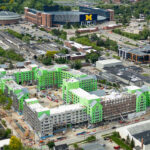
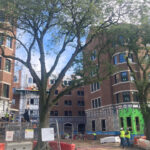
    • Aerial view of Central Campus Housing Project under construction with view of Michigan Stadium and Crisler Stadium.
    • View of the construction site before the Central Campus Housing Complex started to emerge. Empty Elbel Field from S. Division and Benjamin Street.
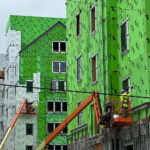
    • Central Campus Housing Complex starts to emerge. Winter.
    • View of the Central Campus Housing Complex construction with view of the railroad tracks.
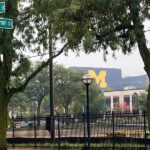
    • Central Campus Housing Complex under construction, Fall 2025, as viewed from entrance to Revelli Hall.
    • Workers at the Central Campus residential housing project, 2025.
  8. I wanna be your dog

    The University of Michigan is known worldwide for the lifelong bonds shared among its students, faculty, parents, coaches, athletes, and alumni. Ever since U-M's first president took office, Michigan’s furry friends — the canine kind — have been revered by the community. Campus dogs bring joy to sports fans, offer emotional support to hospital patients, and relieve stress for students staring down their final exams. Enjoy this tribute to some of the most memorable members of the Michigan family.
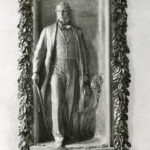
    • Statue of U-M President Henry Philip Tappan with his dog Leo.
    • While there are no known preserved photos of Leo, this represents what he likely looked like. Photo courtesy: American Kennel Club
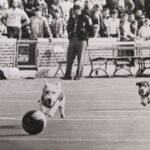
    • Whiskey running across the football field with his ball. Photo courtesy Michigan Victors
    • Whiskey, left, runs down the field with Brandy, right. Photo courtesy Bentley Historical Society
    • Softball Coach Carol Hutchins with her dog, Marley. Photo courtesy: @UMCoachHutch on X
    • Victor holding his famous yellow frisbee during a football game day. Photo Courtesy: @victorthefrisbeedog on Instagram
  9. ‘The postcard craze’ of historic Michigan

    In the early 1900s, photo postcards offered an affordable and easy way to stay connected in a nation undergoing rapid change. The William L. Clements Library invites you to explore its digital database of more than 66,000 real photo postcards that illustrate an American society straddling rural, agrarian, pre-industrial life and an increase in mechanization, urbanization, and electrification. The expansive database comes from the David V. Tinder Collection of Michigan Photography.  (Click on each image to enlarge.)
    • Interior of Garscallen Bro's Store in Selkirk, Michigan taken by F.a. Hamlin. Image credit: David V. Tinder Collection of Michigan Photography, University of Michigan William L. Clements Library.
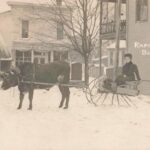
    • Two oxen were considered “rapid transit” when this image was taken in Bloomingdale, Michigan. Image credit: David V. Tinder Collection of Michigan Photography, University of Michigan William L. Clements Library.
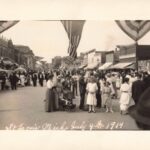
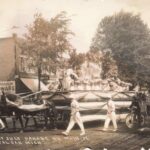
    • Fourth of July Parade on Main St., Royal Oak, Michigan. Image credit: David V. Tinder Collection of Michigan Photography, University of Michigan William L. Clements Library.
    • Boys of 2nd and 3rd Grades in Flag Drill, 1906 - '07. Image credit: David V. Tinder Collection of Michigan Photography, University of Michigan William L. Clements Library.
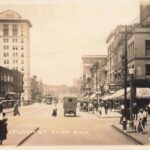
    • This postcard depicting Saginaw Street in Flint, Michigan, is an example of a postcard classified under the streets and city & town life themes. Image credit: David V. Tinder Collection of Michigan Photography, University of Michigan William L. Clements Library.