
Research News
-
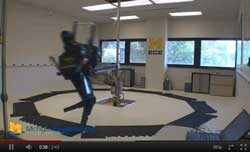
Run, Robot! MABEL is now the world's fastest two-legged robot with knees
A robot in a University of Michigan lab can run like a human—a feat that represents the height of agility and efficiency for a two-legged machine. “It’s stunning,” says professor Jessy Grizzle. “I have never seen a machine doing a motion like this.”
-
Motives matter: Why we volunteer has an impact on our health
People who give, live longer, studies have shown. Now, a new study shows that why people volunteer—not whether they volunteer—is what really counts.
-
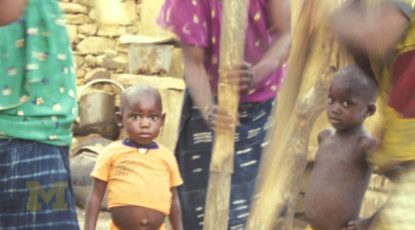
Actually, it doesn't take a village
“In the African villages that I study in Mali, children fare as well in nuclear families as they do in extended families,” says U-M professor Beverly Strassmann.
-
Teach yourself to be wiser
Wise folks say that wisdom can only be earned by experience, but new research indicates that there might be a way to develop your capacity to make wise decisions.
-
Listening to the Dow
U-M librarian Justin Joque’s “sonification” of stock market activity since the 1930s provides weird and revealing insight into the economy.
-
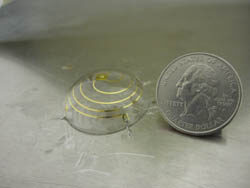
Teeny-tiny antennas
U-M researchers have found a way to mass-produce antennas so small that they approach the fundamental minimum size limit for their bandwidth, or data rate, of operation. It could lead to new generations of wireless consumer electronics and mobile devices.
-

The universe may have been born spinning
Physicists and astronomers have long believed that the universe has mirror symmetry, like a basketball. But recent findings from the University of Michigan suggest that the shape of the Big Bang might be more complicated than previously thought, and that the early universe spun on an axis.
-

'Dead' galaxies aren't so dead after all
“Scientists thought these were dead galaxies that had finished making stars a long time ago,” U-M researcher Alyson Ford said. “But we’ve shown that they are still alive and are forming stars at a fairly low level.”
-
AIDS at 30
When Michael Jonas learned he was HIV positive, he returned from Florida to his home in Jackson, Mich., to die. That was a decade ago, but Jonas is still alive, taking antiviral drugs and planning his future. His is one sign of progress in the 30 years since doctors first recognized the disease we now know as AIDS, but there’s still much to contend with.
